
Views: 0 Author: Site Editor Publish Time: 2026-11-22 Origin: Site


The joint-health supplement market continues to expand rapidly across the globe. However, severe hidden dangers lurk within the complex global supply chain. Adulteration remains rampant, threatening both brand reputation and consumer safety. Unethical suppliers often use cheap adulterants to artificially inflate apparent assay values. This deceptive practice makes sub-potent materials appear completely legitimate on paper.
To combat this industry-wide problem, the CPC (Cetylpyridinium Chloride) titration method serves as the ultimate defense. It stands as the pharmacopeial gold standard (USP/EP) for quantifying Chondroitin Sulfate. Regulatory bodies globally recognize its reliability and accuracy in commercial testing environments.
This article functions as a comprehensive technical guide for procurement managers, QA/QC personnel, and formulation scientists. We will help you evaluate supplier testing claims objectively. You will learn how to read Certificates of Analysis (COAs) accurately and spot hidden red flags. By mastering these analytical principles, you can consistently secure pure, unadulterated raw materials for your manufacturing lines.
The CPC Standard: The CPC assay is the globally recognized USP and EP method for testing Chondroitin Sulfate purity due to its accuracy in measuring sulfated glycosaminoglycans.
Adulteration Risks: Basic testing methods can be fooled by cheap additives (like sodium hexametaphosphate); understanding the CPC method is critical to mitigating supply chain fraud.
Source Variances: Testing protocols must account for raw material origins, particularly when verifying the moisture and protein limits inherent to Bovine Chondroitin Sulfate.
COA Verification: Securing legitimate Food Grade Chondroitin Sulfate requires matching CPC assay results with complementary identification tests (like specific rotation or IR spectroscopy).
Financial and reputational risks soar when manufacturers utilize sub-potent or adulterated raw materials. A single compromised batch can trigger devastating product recalls. Regulatory agencies frequently intervene when label claims fail to match actual product contents. You risk losing hard-earned consumer trust overnight. Rebuilding a damaged brand reputation often takes years and requires massive capital investment.
Unethical suppliers actively exploit rudimentary testing methods to maximize their profit margins. They deploy non-chondroitin sulfates, alginates, or cheap synthetic polymers into the raw material. Sodium hexametaphosphate represents a particularly notorious adulterant in this space. These cheap fillers mimic the targeted chemical compound perfectly during basic analysis. They create dangerous false positives, leading formulation scientists to approve completely fraudulent material batches.
A highly reliable procurement strategy demands rigorous, uncompromised verification. You must insist on raw materials tested via standardized, pharmacopeia-aligned methodologies. Never rely on proprietary or unvalidated supplier tests. Unvalidated methods often lack the scientific rigor required to detect sophisticated adulteration. Your manufacturing success depends entirely on objective, reproducible analytical data from trusted frameworks.
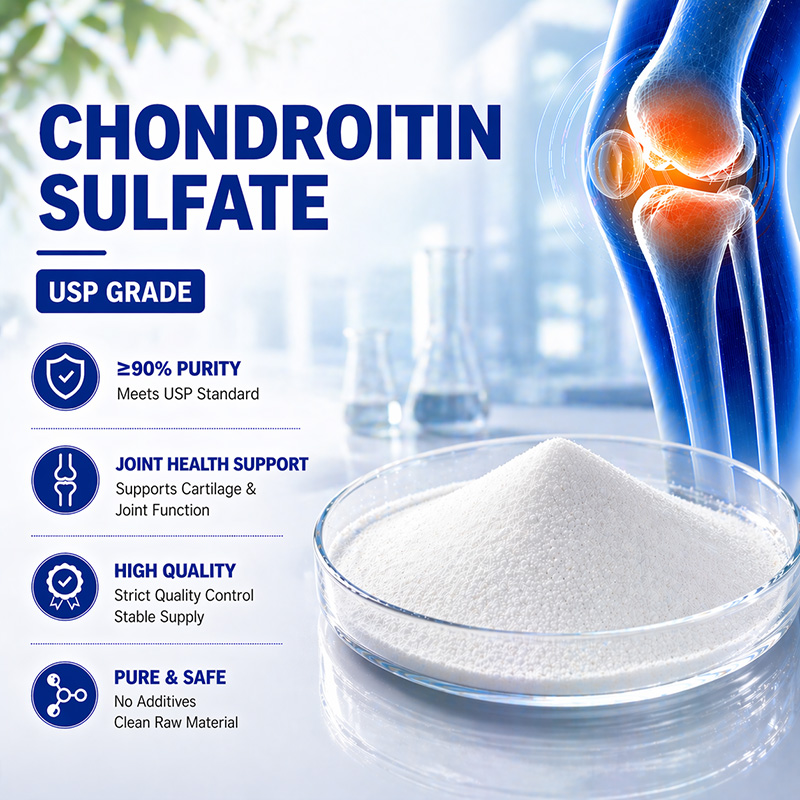
The CPC (Cetylpyridinium Chloride) assay provides a highly robust solution for purity quantification. Laboratories around the world rely on it for routine raw material release. It effectively separates legitimate active ingredients from sophisticated chemical mimics.
The test relies on a distinct and predictable chemical mechanism. CPC acts as a potent cationic surfactant. It binds directly and specifically to the negatively charged polyanions found in the target molecule. These polyanions consist primarily of sulfate groups scattered along the polymer chain. This exact binding reaction causes a highly visible precipitation in the laboratory testing solution.
During the analytical titration process, chemists measure the exact volume of CPC required to fully precipitate the compound. They carefully monitor the solution until reaching the precise endpoint. Analysts then use this volumetric measurement to calculate the exact percentage of active chondroitin present in the raw sample. The calculation accounts for moisture content to deliver a "dried basis" purity score.
The United States Pharmacopeia (USP) and European Pharmacopoeia (EP) officially adopt this method as the industry benchmark. The CPC assay strikes a perfect balance of accuracy, repeatability, and cost-effectiveness. Alternate tests often require millions of dollars in highly specialized equipment. However, commercial QA environments can deploy CPC testing daily for routine batch releases without breaking procurement budgets.
Evaluating raw material purity requires selecting the right analytical tool for the specific job. Quality assurance teams must understand how diverse testing methodologies compare. They must know when to deploy broad quantification versus highly specific profiling.
The CPC method delivers exceptional broad quantification based on sulfate group binding. Enzymatic HPLC (eHPLC) offers a completely different approach through highly specific molecular weight profiling. eHPLC analytical techniques literally break down the long polymer chains into individual disaccharides. This enzymatic digestion allows scientists to perform precise structural analysis and map the exact molecular fingerprint.
The CPC method remains the undisputed standard for routine lot-to-lot purity release. Manufacturers rely on it heavily for daily operational efficiency. Conversely, we strongly recommend using eHPLC for initial supplier vetting. You should also deploy eHPLC when your team investigates suspected, highly sophisticated adulteration attempts. Using both methods at different stages ensures maximum supply chain security.
Table 1: CPC Assay vs. eHPLC Comparison Matrix
Analytical Method | Primary Testing Function | Cost & Processing Speed | Optimal Business Use Case |
|---|---|---|---|
CPC Titration (USP/EP) | Broad polyanion/sulfate quantification | Highly cost-effective, rapid turnaround | Routine lot-to-lot QA release protocols |
Enzymatic HPLC (eHPLC) | Molecular weight & disaccharide structural profiling | Expensive, highly time-consuming | New supplier vetting & deep fraud investigation |
The CPC assay successfully measures overall purity and total content volume. However, confirming the true scientific identity of the material requires further, rigorous scrutiny. You must authenticate the exact molecular identity via Fourier Transform Infrared Absorption (FTIR) spectroscopy and Specific Rotation analyses.
IR spectroscopy acts exactly like a chemical fingerprint scan. It matches the unique absorption peaks of your raw material against a known, verified reference standard. Meanwhile, Specific Rotation measures how the dissolved material bends polarized light. Together, these complementary tests close the loopholes left by quantitative assays.
We must acknowledge a transparent reality. No single analytical test acts as an infallible silver bullet against modern supply chain fraud. A robust, trustworthy COA always relies on a comprehensive matrix of tests. Honest suppliers gladly provide this comprehensive data. Transparent testing protocols build long-lasting, profitable trust between global suppliers and supplement manufacturers.
Formulators must always address specific implementation realities based on the biological origin of the material. Different animal sources yield slightly different molecular structures. Bovine Chondroitin Sulfate possesses a highly unique chemical profile. Quality control teams must adjust their evaluation parameters to match this specific biological reality.
Bovine-derived material differs slightly in average molecular weight when compared to alternative sources. It generally presents distinct sulfation patterns compared to porcine, avian, or marine sources. Fortunately, standard CPC testing parameters natively account for these subtle structural variances. QA teams merely need to adjust their acceptable reference ranges based on the specific monograph standards designated for bovine derivatives.
Testing bulk purity represents only one half of the overall evaluation equation. Mammalian sources inherently demand strict biological safety protocols. Verified origin traceability acts as your primary defense against cross-contamination. Mandatory BSE/TSE-free certification remains a strict, legally binding non-negotiable requirement. Procurement teams must collect documented veterinary health certificates for every incoming batch of bovine materials.
Incredibly strict parameters govern whether a raw material qualifies for human consumption. A high quantitative assay score alone cannot guarantee complete consumer safety. It definitely cannot guarantee strict regulatory compliance. Procurement teams must dig far deeper into the analytical data.
While a standard CPC assay might easily verify 90% or 95% active purity, QA professionals must thoroughly review the remaining percentage. What exactly constitutes the remaining 5% to 10% of the bulk powder? Dietary supplement compliance demands a holistic, unflinching evaluation of trace impurities. You must secure legitimate Food Grade Chondroitin Sulfate to protect your brand from catastrophic legal liability.
You must strictly monitor several essential safety thresholds alongside your baseline CPC score:
Heavy Metals: Ensure rigorous regulatory limits for lead, arsenic, cadmium, and mercury. Manufacturers must often comply with stringent California Proposition 65 thresholds.
Microbial Limits: Confirm absolute strict control over total plate count, yeast, mold, E. coli, and Salmonella. Any microbial failure demands immediate batch rejection.
Loss on Drying (LOD): Verify acceptable moisture content. Excessive moisture rapidly accelerates dangerous microbial growth and degrades compound stability over time.
Protein Residues: Check residual protein levels carefully. They must remain well within specified monograph limits to prevent severe allergic reactions in sensitive consumers.
Thoroughly verifying these critical contaminant limits protects your end consumers. It also shields your manufacturing operation from costly regulatory audits and legal liability.
Procurement teams require a highly reliable analytical framework when evaluating any new supplier's COA. Recognizing distinct warning signs early saves significant time and prevents disastrous purchasing mistakes. You must scrutinize testing reports with intense skepticism.
Watch closely for these critical documentary red flags:
Unspecified Testing Methods: A COA proudly claiming "90% Purity" means absolutely nothing without precise context. If the document does not explicitly list "CPC Titration" or a globally recognized USP/EP monograph method, consider the data completely unreliable.
Outdated Pharmacopeia Standards: Regulatory testing guidelines evolve continuously to combat new adulterants. Unreliable suppliers often test against obsolete versions of the USP monograph. They do this purposely to artificially manipulate passing results.
Perfectly Identical Lot Results: If a supplier submits three different COAs for three distinct lots, and all data points match exactly, suspect data falsification immediately. Real-world manufacturing always produces minor statistical variances.
Implement clear next-step actions immediately to safeguard your vulnerable supply chain. We highly recommend requesting independent third-party lab verification for new vendors. Rely on respected, accredited laboratories like Alkemist Labs or Eurofins for unbiased analysis.
Always test the first three consecutive lots from any new supplier thoroughly. Do not rely solely on their internal paperwork. Only transition to reduced testing protocols after establishing consistent, historically verified compliance. This diligent approach filters out bad actors before their raw materials ever reach your blending tanks.
The CPC assay firmly stands as the foundational defense against dangerous adulteration within the modern supply chain. It provides a standardized, globally recognized framework for quantifying purity accurately. However, securing high-quality raw materials requires far more than just checking a single purity box on a supplier COA.
True material evaluation requires analyzing the CPC assay in direct conjunction with robust identity testing. You must prioritize deep origin traceability, BSE/TSE compliance, and exceptionally strict food-grade safety standards. By holistically reviewing microbial limits, heavy metals, and residual proteins, you ensure total consumer safety.
Buyers hold the ultimate power to drive total industry accountability. We strongly advise procurement teams and QA managers to demand highly transparent, USP/EP-aligned COAs from all prospective partners. Insist on definitively clear testing methodologies. Verify their internal claims through independent third-party laboratories. Taking these decisive actions will guarantee ultimate product efficacy and secure your brand's long-term market dominance.
A: Industry standards typically demand a minimum of 90% purity for standard dietary supplement applications. However, premium formulations often require 95% or higher. Laboratories must always calculate these percentages on a rigorously dried basis to account for natural moisture variances.
A: The CPC assay possesses a specific limitation. It binds broadly to polyanions. Therefore, highly sophisticated adulterants containing cheap sulfates can sometimes interfere and artificially inflate the score. This vulnerability explains why QA teams must run IR identification and specific rotation tests alongside CPC titrations.
A: Yes, laboratories globally apply the CPC titration method to bovine, porcine, avian, and marine sources. While the foundational testing mechanism remains identical, QA analysts may slightly adjust their specific reference standards based on the precise biological origin detailed in the pharmacopeial monograph.
A: Suppliers occasionally use HPLC for highly specific molecular structural profiling or analyzing complex proprietary blends. HPLC identifies precise molecular weights. However, CPC remains the absolute regulatory and pharmacopeial gold standard for bulk raw material QA release due to its reliability and practical cost-effectiveness.


